
In April, the average price of a pound of ground coffee in the U.S. hit $9.72, its fourth straight all-time high. A big reason is Brazil, which grows more coffee than any other country. When drought hits there, global supply shrinks and prices climb for everyone, which helped push Arabica futures above $4.00 a pound in 2025. The strange part is that the commodity market had already cooled off by then, with futures sliding back into the mid-$2.00 range.
So, why didn't everyone’s coffee get cheaper? Because beans don't travel from the trading floor to your property overnight. Roasters typically hold two to three months of green coffee, spend another two to three months roasting and packaging it, and renegotiate with buyers on a quarterly cycle.
Analysts estimate it takes at least nine months for a change in raw bean prices to reach consumers. And since raw beans make up at least 40% of the cost of a bag of roast and ground coffee, every swing in the market eventually lands somewhere downstream. Usually on an invoice.
That lag is still working its way through. As of September 2026, coffee cost 7.1% more than it did a year earlier. And while October finally brought some relief, with prices dipping 3.7% from the month before, which is welcome news, it’s not exactly a reason to throw a party in the break room.
You can’t do much about rainfall in Brazil, but nearly everything that happens after the beans reach your property, from how coffee gets used to how it’s stocked to what you signed, is fair game. And since switching off the machine isn’t something anyone wants to announce in the next resident newsletter, here are six places to start.
Cap cups per person, not hours on the clock.
Most coffee programs that try to limit usage do it with a timer. The machine runs from 7 a.m. to 11 a.m., goes dark for the rest of the day and anyone who works nights or sleeps past 10 learns to make other arrangements.
Sure, a timer lowers your coffee bill, but only by cutting off access for everyone. And during the hours the machine is on, it does nothing to stop the budget-buster: the handful of super users who treat a free amenity like a bottomless refill station. Economists call it the tragedy of the commons. Property managers call it Tuesday.
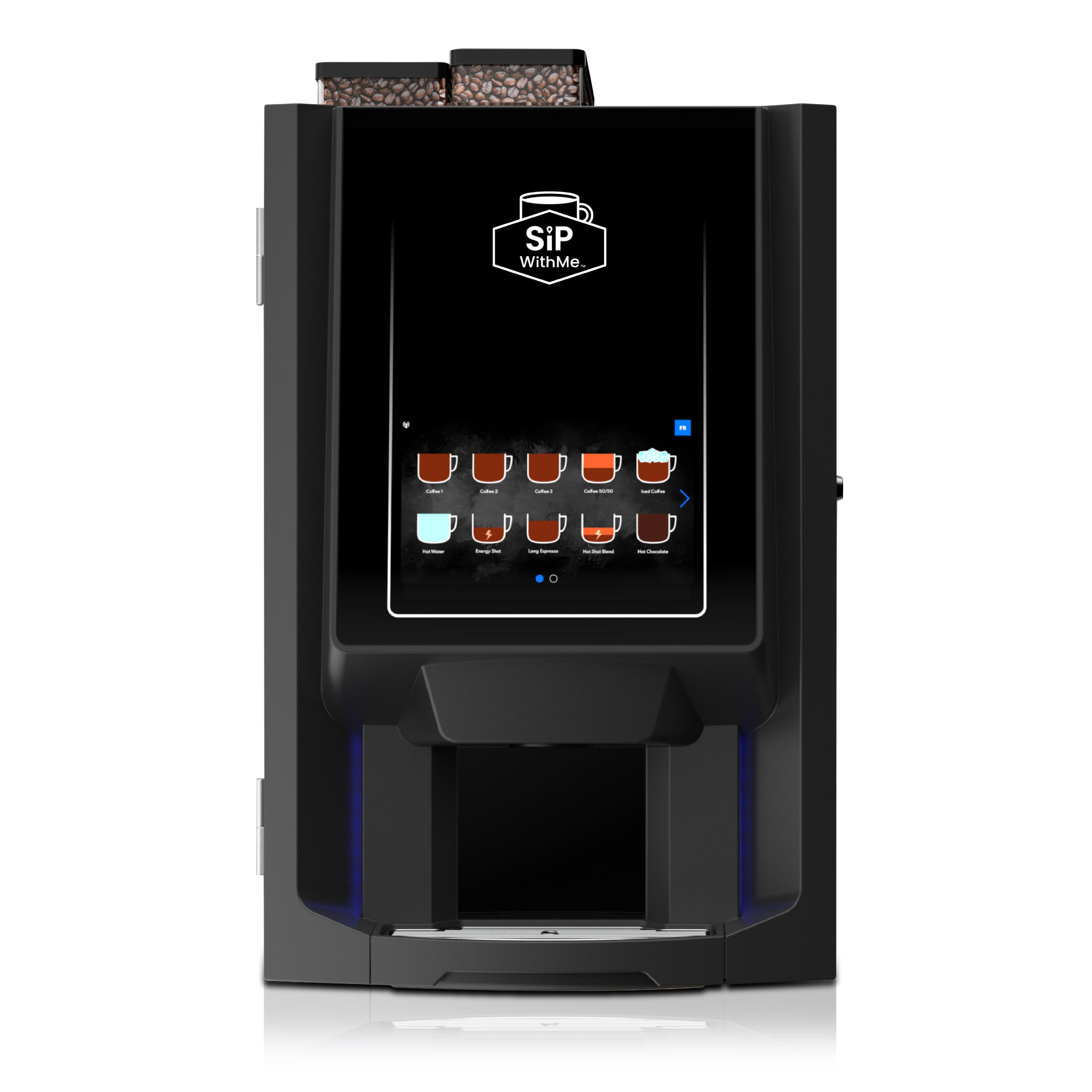
A per-person cup allowance fixes the math without punishing everyone else. Each user gets a set number of drinks per month, the machine keeps count, and the coffee stays available whenever people actually want it. SipWithMe's Cup Allowance plans, for example, work on a simple per-person, per-month structure. Properties can start with unlimited access while usage is monitored for the first few months, then set an allowance based on real behavior instead of a hunch.
Aventine Littleton, a 227-unit community in Colorado, started with 10 complimentary cups per resident. When costs became a concern, the team cut the allowance to five. Mutiny? Not even close. “Residents are happy, and we've been able to keep something we all value,” said Leasing Manager Victoria C. Residents who want more can buy additional cups, priced below what they'd pay at the café down the street.
Residents are happy, and we've been able to keep something we all value.
Budget from usage data, not the empty-bin method.
Ask most on-site teams how many cups their coffee amenity serves in a month, and you'll get an honest shrug. Without consumption data, budgeting turns into guesswork, and guesswork has a way of rounding up.
Usage reports answer the questions nobody had numbers for before: how many drinks consumed by how many people and at what time of day.
You might find the machine is oversized for a quieter building or that it can’t keep up on Monday mornings. It’s also possible that three very enthusiastic regulars account for a third of your volume.
Data only saves money if you're allowed to act on it, though. Look for a vendor whose plans can flex with demand, so lowering an allowance or swapping to a better-sized machine doesn't mean waiting out the rest of a multi-year term. With SipWithMe, for example, you can change your plan mid-agreement without waiting for renewal.
Make sure every bit of coffee ends up in a cup.
Manual coffee inventory fails in a very predictable way. Someone notices the coffee is running low and orders extra to be safe. A week later, someone else does the same thing, and the storage closet slowly fills with backup coffee nobody remembers buying. Then a busy week hits, and the coffee runs out anyway.
The fix is closing the gap between what you buy and what people actually drink. Technology-enabled machines that track consumption and ship supplies automatically, based on real usage data, keep the closet lean and the machine full, without anyone counting bags or guessing.
Machine design handles the rest. When beans and powders are stored inside the unit instead of sitting out as pods anyone can pocket, there’s nothing to walk off. And because every drink is precisely portioned and brewed on demand, nobody’s dumping half a pot down the drain at the end of the morning rush. (We dig into both of those leaks in The Expensive Consequences of Settling for a Mediocre Coffee Amenity.) A few missing pods and a pot down the drain used to be annoying. At nearly $10 a pound, it’s a cost you’ll feel.
Pay one price for the whole program.
Standard coffee solutions often look affordable because the minimum spend is small. But a minimum spend is a contractual floor, not an estimate of what you’ll actually pay each month. Ingredients, cups, lids, delivery fees, filter replacements, service calls, maintenance and annual price increases can all be billed on top of it. And if you don’t see a separate charge for the machine itself, don’t assume it’s free. Its cost is often buried in the fine print, and you’re paying for it somewhere.
That structure is annoying in a calm market. In a volatile one, it's a liability. Many providers price on a cost-plus basis, so when their bean costs rise, the increase (plus their margin) rolls straight onto your invoice. You find out what the coffee market did the same way you find out about the weather: once it's already raining.
Minimum spend + extras
- +Ingredients and consumables
- +Delivery and supply fees
- +Service and maintenance
- +Equipment-related costs
- +Potential price increases
One all-inclusive price
- ✓Coffee machine and installation
- ✓Ingredients and supplies
- ✓Monitoring and usage reporting
- ✓Maintenance
- ✓Support
All-inclusive pricing flips that. The machine, installation, monitoring, maintenance, ingredients, usage reporting, and support are bundled into one predictable monthly cost, so market swings don’t show up as surprise fees, and whoever manages the budget gets a number they can plan around.
While you’re at it, ask where your supplier’s coffee comes from. A provider that buys at volume through long-standing roaster relationships, like SipWithMe’s partnerships with Metropolis Coffee Company, Frothy Monkey and Independence Coffee Co., has far more room to absorb market pressure than one buying bag by bag.
Read the fine print before you sign away the next few years.
Coffee contracts are rarely the most thrilling document on a property manager's desk, which is precisely why the expensive parts like to hide there. Before you sign or renew, carefully review the following items:
Coffee Contract Review Checklist
0 of 5 reviewedIf any of those answers are fuzzy, that's your answer. Our guide, How to Decipher Your Coffee Contract , breaks down the terms that most often catch properties off guard and what to ask before you commit.
Track cost per cup, not just cost per month.
A monthly invoice tells you what you paid. It doesn't tell you what you got. The more useful number is cost per cup served: everything you spend on the amenity in a month, divided by the drinks people actually poured.
Start with every cost driver: equipment, service, beans, flavors, consumables, cleaning, and preventive maintenance, including anything billed outside the contracted minimum. Then, add the cost that never appears on an invoice: labor. If, for example, someone on your team spends three hours a week ordering supplies, wiping down a leaky machine, and fielding resident questions, that can equate to more than 150 hours a year spent babysitting an amenity.
Divide by cups served, and the comparisons get honest fast. A program with a low minimum and a long list of add-ons can cost more per cup than one with a higher all-inclusive price. A machine nobody uses may seem like it’s saving you money, right up until you realize each drink costs as much as a café latte.
What's your actual cost per cup?
When you're weighing providers and solutions, cost per cup puts a bundled price and a pile of line items on equal footing, and the difference can be more significant than you’d expect.
Suppliers that bundle the machine, ingredients, maintenance and support into one all-inclusive price remove the separately billed fees that inflate a typical coffee invoice. Pair that with cup allowances and portioned brewing to keep usage in check, and your cost per cup becomes both lower and easier to predict. Among properties using SipWithMe, 45% report saving $200 or more per month compared to their previous coffee program. That’s at least $2,400 a year, per property.
Savings that add up.
When coffee prices fall, who keeps the savings?
Earlier this year, forecasts pointed to record Brazilian output and a possible global surplus, which should eventually ease bean prices. However, “eventually” is doing a lot of work in that sentence. Companies tend to be slow to cut prices after a stretch of severe cost inflation, and higher logistical, regulatory, and traceability costs could keep retail prices elevated even as futures fall. So, if your coffee costs climbed on a cost-plus agreement, don’t count on them sliding back down at the same speed.
Waiting for the market
- • Costs fluctuate with supplier pricing
- • Price reductions may take time to reach invoices
- • Budgeting remains difficult
Building cost control in
- • Usage limits help control consumption
- • Inventory reflects actual demand
- • Predictable pricing simplifies planning
The properties in the best position aren't the ones waiting for the market to turn. They're the ones that set up their programs so the market never had much say in the first place: usage capped by design, inventory matched to real demand, and one predictable price.
Coffee will keep doing what coffee does, on its own nine-month delay. How much of that reaches your budget is up to you.
Don't wait for coffee prices to fall to take control of your costs.
The future of coffee is SipWithMe.
Most coffee vendors pass rising costs straight along to you. SipWithMe is built to keep them in check. Per-person cup allowances control usage without shutting the machine off. Automated replenishment means you never buy more than people drink. Volume buying through our roaster partners helps keep bean costs steady. And it all comes in one all-inclusive monthly price, so you can keep the amenity residents love without letting the market set your budget for you.
See how much your property could save.
Schedule a demo ↗