
We’ve become a nation of coffee connoisseurs.
We’re ordering more lattes, cappuccinos and specialty drinks than ever. We’re willing to leave home to get them. We’ve become so accustomed to ordering exactly what we want, exactly when we want it, that waiting around for a mediocre cup of coffee has become a waste of time.
The National Coffee Association has put some serious numbers behind those habits. Specialty coffee consumption just hit another record high, and out-of-home coffee consumption is approaching pre-pandemic levels.
Meanwhile, plenty of apartment communities, hotels, student housing properties and workplaces are still serving the same coffee they were six years ago.
And paying for the privilege.
An outdated coffee program costs more than what’s on your vendor invoice or what you’re spending on beans and pods. Its real costs are much harder to spot, from staff time and unpredictable expenses to missed opportunities to keep people happy, engaged, and on property.
Let's talk about what you should be paying attention to before another year of mediocre coffee and unpredictable expenses becomes business as usual.
The expectation cost.
According to the National Coffee Association’s National Coffee Data Trends (NCDT) Fall 2026 report, coffee is the country's most-consumed beverage.
Over water.
66% of American adults are drinking coffee daily.
But the data goes deeper than that.
48% of American adults consumed specialty coffee in the past day, a new record.
47% had an espresso-based beverage in the past week, up 17.5% since 2022.
38% of past-day coffee drinkers consumed coffee outside their homes, the highest reported percentage since January 2020.
40% of people purchasing coffee away from home ordered through an app, another record.
☕️ 69% of 25- to 39-year-olds drink specialty coffee every week.
These aren't small shifts in consumer behavior. They're evidence of a coffee culture where quality, choice and convenience increasingly influence where people spend their money.
And those expectations don't disappear when someone walks into an apartment clubhouse, hotel lobby, study lounge or workspace.
Someone who starts every morning with an Americano featuring freshly pulled espresso shots isn't going to be impressed by a lukewarm pot of drip coffee that's been sitting out since breakfast. And someone accustomed to choosing between cappuccinos, mochas and flavored lattes isn't going to consider a single-option brewer a premium amenity.
Give people what they want: coffee that's worth drinking, choices that reflect their preferences and the convenience of enjoying both without leaving the building.
The walkout cost.
Starbucks doesn't need your help attracting customers, but if your on-site coffee leaves a lot to be desired, you’re helping them out anyway.
A resident who passes up the clubhouse coffee for their usual morning latte.
A hotel guest who heads across the street for a decent cappuccino.
An employee who'd rather spend $9 at a local café than suffer through another cup of watery office coffee.
Different people, same decision. They'd rather go out of their way and pay for good coffee than drink what's available for free.
And considering how much people value convenience, that's a telling sign that your coffee amenity isn't delivering what it should.
For hotels, the financial implications are particularly interesting.
One study found that nearly half of hotel guests would leave the property in search of better coffee. And 56% would happily pay for premium coffee, even if a complimentary option were available.
And 56% would happily pay for premium coffee, even if a complimentary option were available.
Free coffee isn't much of a selling point when nobody wants to drink it.
For apartment communities, student housing properties, and workplaces, the cost is less about lost coffee sales and more about missed opportunities to make everyday life a little better.
Think about it. A resident who can grab their favorite latte before work has one less errand to run. A student pulling an all-nighter can get a fresh cappuccino without packing up their laptop and leaving the building. An employee can get their afternoon espresso without turning a coffee break into a 20-minute excursion.
These are small conveniences, sure. But they're also the kinds of everyday experiences that make people appreciate where they stay, live or work.
The financial cost.
We get it. Budgets are tight, replacing equipment takes coordination, and your current coffee provider's monthly minimum looks pretty reasonable on paper.
Why mess with something that seems to be working?
Well, for starters, there's a good chance you're spending considerably more on coffee than you think.
After reviewing hundreds of commercial coffee agreements and speaking with thousands of property teams, we've identified a major blind spot in how properties budget for coffee. Most operators can recite their contracted minimum spend without hesitation. But ask what they're actually spending each month, and they have no idea.
You're budgeting for the minimum while paying for everything else.
Your vendor still charges for the coffee and ingredients you consume, along with any separately billed equipment, supplies, deliveries, filters, maintenance, and service. Those expenses will add up.
Now, multiply those differences across 12 months. Or across an entire portfolio.
You can't protect a budget you don't fully understand. And continuing to renew an agreement without knowing what you're actually paying is a pretty expensive gamble.
The labor cost.
Someone has to keep the coffee flowing. And if your provider isn't handling the behind-the-scenes work, that responsibility falls on you.
And those responsibilities add up:
Inventory management: Monitoring ingredient levels, tracking consumption and placing orders before supplies run out.
Troubleshooting: Investigating error messages, dealing with leaks and trying to get malfunctioning equipment back in service.
Vendor coordination: Scheduling repairs, following up on delayed shipments and making sure outstanding service requests actually get resolved.
Customer support: Answering questions and addressing complaints about coffee quality, drink availability and equipment issues.
An extra 15 minutes here or half an hour there add up across weeks, months, and multiple locations, and you're paying for a considerable amount of labor that never appears on your coffee invoice.
Every hour your employees spend managing coffee is an hour they can't spend serving residents, assisting guests, supporting colleagues or handling the responsibilities they were hired to do.
And when equipment repeatedly breaks down, the consequences reach beyond your employees. Residents, guests and colleagues lose access to something they've come to expect, while your team gets stuck explaining why the coffee machine isn't working. Again.
Victoria C., property manager at Aventine Littleton, knows exactly how frustrating that cycle can get.
After years of dealing with unreliable coffee equipment at other properties, SipWithMe was a welcome change when she joined the 227-unit Colorado apartment community.
"I've managed properties with Aramark and even Starbucks machines. With Aramark, the coffee just didn't taste great. With the Starbucks machine, it was constantly down and leaking. SipWithMe has been a total upgrade in every way."
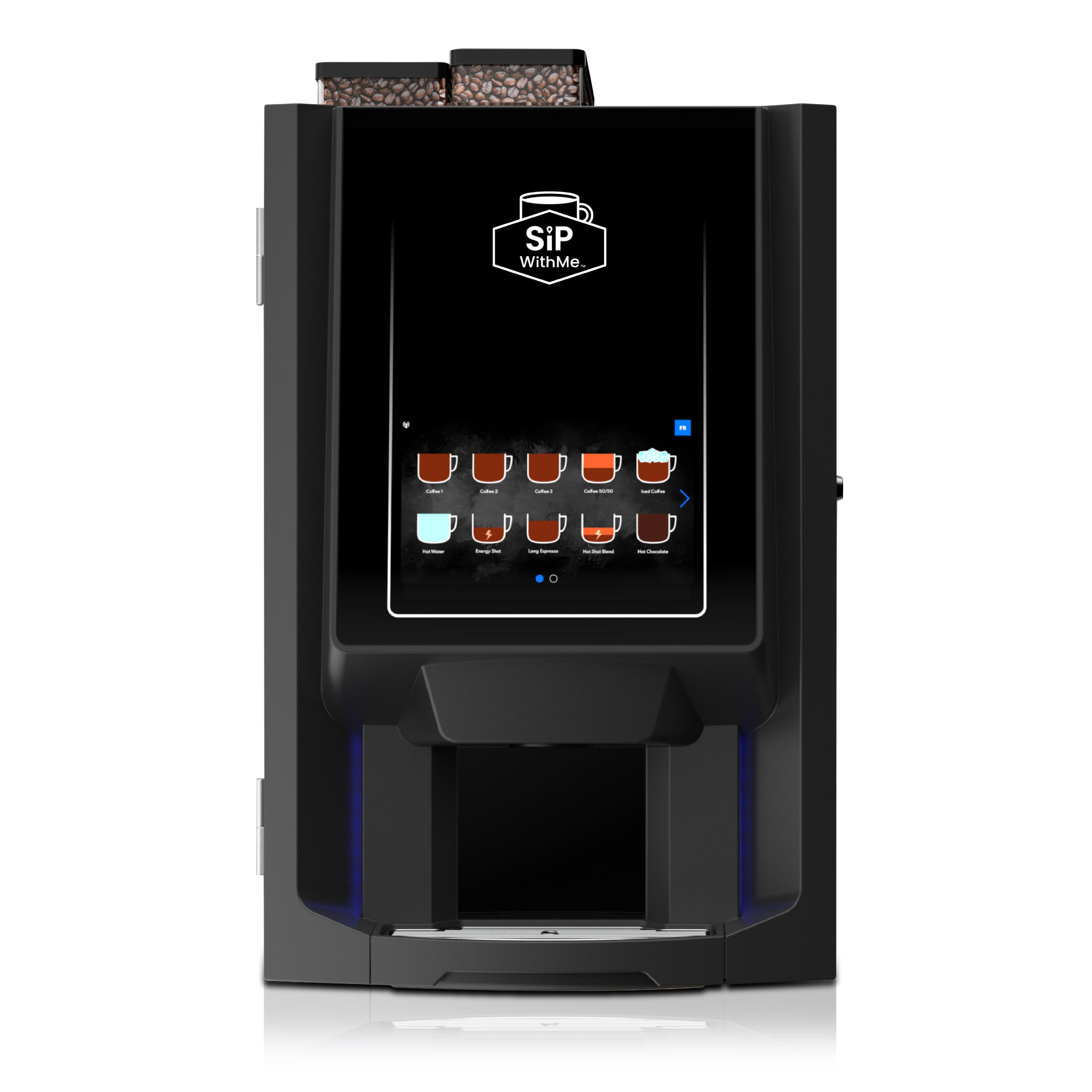
With SipWithMe, automated supply replenishment takes ordering off the team's plate, while reliable equipment and responsive support keep coffee-related disruptions to a minimum. Residents get the quality and convenience they expect, without the operational headaches Victoria had come to expect from other providers.
And when the community wanted greater control over coffee consumption, Victoria worked with SipWithMe to adjust its complimentary cup allowance. The change helped rein in costs while keeping a popular amenity available to residents.
Victoria understood something that gets lost when operators focus exclusively on price.
A cheaper coffee provider isn't necessarily a better deal when your team ends up paying for the difference with their time.
The experience cost.
Every great amenity gives people another reason to appreciate where they live, work, study or stay. But coffee has an advantage that many other amenities don't: it’s already a daily part of people's lives
That kind of regular engagement creates a valuable opportunity to build satisfaction and loyalty and gives you hundreds of opportunities each year to deliver an experience people genuinely appreciate.
Of course, it also gives you hundreds of opportunities to disappoint them.
If the coffee tastes mediocre, the machine keeps breaking down or the menu offers little beyond basic drip coffee, people will eventually find something better.
That's why low usage deserves a closer look before you conclude there's little demand. Because your residents, guests, students, or employees might love coffee, but they just might not love your coffee.
The National Coffee Association's latest findings reinforce how much consumer preferences have evolved. People have plenty of options for getting the drinks they enjoy, and they're increasingly accustomed to seeking them out.
If they're willing to leave your property and pay for a better cup, consider what you're missing by continuing to offer coffee they don't want.
For multifamily and student housing communities, a genuinely popular coffee amenity gives prospective residents another reason to picture themselves living there and current residents something to appreciate throughout their lease. Hotels can make a stronger impression on guests who value a great cup of coffee without an extra stop. Workplaces can offer employees a convenient perk they'll actually use between meetings, deadlines and everything else on their calendars.
None of those benefits requires coffee to be the deciding factor in a lease renewal, booking or employment decision. The value comes from consistently delivering an experience that makes people happier to be there.
And if you're already investing in a coffee amenity, shouldn't that be the goal?
The waste cost.
Coffee waste doesn't always get the same attention as equipment costs, vendor fees or employee hours. But every pot of discarded coffee, expired ingredient and unnecessary supply purchase is another expense your property absorbs with nothing to show for it.
And standard coffee bars can make that waste surprisingly easy to accumulate.
Take batch brewing, for example. Someone has to predict how much coffee people will drink before they actually drink it. Brew too little, and people are left waiting for another pot. Brew too much, and the leftovers end up down the drain.
Consider how often that happens across an entire week, month or portfolio.
Every wasted pot costs you twice: once for the coffee itself and again for the employee time spent brewing and disposing of it.
On-demand brewing offers a more practical approach, preparing individual beverages as people request them rather than relying on estimates of how much coffee they'll consume. Better visibility into ingredient usage can also help operators make smarter purchasing decisions and avoid stocking more than they need.
Coffee prep is only one part of the waste equation.
Disposable cups, lids and other accessories contribute to the environmental footprint of a coffee program. A life cycle assessment found that reusable cups can have lower environmental impacts than single-use alternatives across several categories when reused enough times.
For operators looking to reduce waste, the opportunity extends from how coffee gets brewed to how ingredients are purchased, supplies are managed and beverages are served.
The shrinkage cost.
Coffee pods have a way of…walking off.
It makes sense when you think about it. Pods are small, individually sealed and easy to slip into a pocket or bag. They fit the same brewer a lot of people already have at home. And with many pods costing well over 50 cents apiece, a handful adds up to real money.
A resident grabs a few to have on hand for those days they don’t want to leave their unit. A hotel guest stocks up before checkout. An employee figures nobody will miss a sleeve or two from the supply closet. Nobody thinks of it as stealing. It’s just coffee.
But those handfuls add up fast. And because most pod setups don’t track individual drinks, it’s nearly impossible to tell the difference between a popular amenity and a disappearing one. Your reorders go up, your spend goes up, and on paper it all looks like demand.
Then come the workarounds. Pods get moved behind the front desk. Cabinets get locks. Someone starts handing them out one at a time or counting boxes at the end of the week. Now your team is spending time guarding the coffee, and the people the amenity was meant for have to ask permission to have a cup. That’s not much of a perk for anyone.
The answer isn’t tighter security. It’s a coffee program that doesn’t leave a take-home product sitting on the counter.
When ingredients are stored inside the machine and every drink is brewed on demand, there’s nothing to pocket. Usage data shows exactly how many drinks are being made, so your supply orders reflect what people actually drink rather than what goes missing. And if you want more control, a complimentary cup allowance lets you set limits on the amenity itself instead of policing the supply closet.
Your coffee budget should go toward coffee people enjoy on your property. Not toward stocking their kitchens at home.
The most expensive coffee program might be the one you never question.
There's a reason outdated coffee programs can stick around for years.
The machine is installed. The contract keeps renewing. Coffee is available, invoices get paid and everyone moves on to the next priority. Everything looks fine on paper. But a functioning coffee machine doesn't necessarily mean a successful coffee solution.
Having a machine in the building tells you very little about the value you're getting from it.
It doesn't tell you how many people use it, which drinks they prefer, how much you're spending beyond the contracted minimum or how many hours your employees devote to keeping it running.
And it certainly doesn’t reveal how many people have abandoned the amenity in favor of better coffee elsewhere.
Before you renew another contract or roll the same coffee expenses into next year's budget, take a closer look at what you're paying for.
-
Are people actually drinking the coffee? Review usage data, dispensing patterns and feedback. A machine that gets little attention might have a demand problem, a quality problem or both.
-
Does your menu reflect what people want to drink? Consider the quality, variety and convenience of your current offering, especially as specialty coffee continues to gain popularity.
-
Do you know your actual monthly spend? Pull your invoices, account for additional fees and compare the total against the minimum in your contract.
-
How much employee time does your coffee program consume? Factor in supply ordering, troubleshooting, service coordination and the interruptions that pull your team away from other responsibilities.
-
Is the experience worth what you're paying? Look beyond the equipment and monthly invoice. Consider reliability, satisfaction, usage and whether the amenity gives people a reason to appreciate your property.
-
Does your supply usage match your drink count? If you’re reordering faster than people seem to be drinking, some of that inventory may be leaving the building.
If you're struggling to answer these questions, you're overdue for a serious coffee amenity evaluation. Because continuing to pay for coffee without knowing what you're getting in return isn't much of a cost-control strategy.
The cost of doing nothing adds up, but so does the value of making a smarter investment.
See how SipWithMe can help you deliver better coffee, simplify operations and get more from every dollar you spend.
Schedule a demo