

Budgeting for multifamily amenities is complex, requiring careful analysis and thoughtful decision-making.
01 Do you give your existing amenities a refresh?
02 Do you keep repairing that aging amenity for another year?
03 Do you invest in something completely new?
04 Do you cut costs wherever possible to increase NOI?
Each path comes at a cost.
Refreshing an existing amenity can stretch its life for a fraction of replacement cost, but only if the underlying structure or equipment is still sound.
Repairing that painfully outdated amenity again, for “just one more year,” might be the cheapest option now but the most expensive option in the long run.
Choosing a brand new amenity may seem like a shortcut during the busiest time of the year. Reach out to a supplier, receive a quote, throw it in the budget. The problem is that the upfront investment is typically only a fraction of what the amenity will ultimately cost your community, as ancillary fees are seldom disclosed in proposals.
Completely eliminating amenities and services may save you money temporarily, but it could also remove conveniences that are directly impacting resident retention and satisfaction.
The goal of amenity budgeting should always be to balance operational cost against the amenity’s real impact on retention and NOI.
Key budgeting terms
| Term | Definition |
|---|---|
| CapEx | One-time investments like renovations and new spaces. |
| OpEx | Ongoing costs such as utilities, maintenance and vendor services. |
| Total cost of ownership | The complete lifetime cost of owning and operating an amenity. |
| ROI (Return on investment) | The value an amenity creates through resident satisfaction, increased operational efficiency and retention. |
| NOI (Net Operating Income) | How much money a property makes after you subtract normal daily operating costs (like repairs, taxes and insurance), but before paying loan or mortgage costs. |
Building a multifamily amenity budget
The steps below will help you evaluate your current offerings, uncover their true costs and make smarter investment decisions. This is how you build your budget:
Thoroughly and thoughtfully evaluate your current amenity mix.
Before setting your budget, spend time carefully evaluating your current amenity mix.
First, take time to discover what’s adding real value, keeping in mind that residents don’t think about amenities the same way you do. They care about having access to services and solutions that support and enhance everyday life. Fitness centers. Package lockers. Coworking spaces. Pet-focused amenities. High-quality coffee. Self-serve printing.
To determine if an amenity is making a positive contribution to your community, ask yourself…
- Have residents integrated it into their regular routines?
- Does it constantly stay in use?
- Is it regularly mentioned in positive reviews?
- Has it enhanced your operational efficiency?
- Has it helped you reduce your expenses?
- Is it helping to build community and connection?
On the flip side, ask yourself…
- Has it created unnecessary work for your team?
- Does it routinely pull staff away from high-value tasks and priorities?
- Does it cost more time and money than it’s giving back?
Clearly defining which of your existing amenities are delivering real value and which are draining your resources is one of the most valuable exercises you can complete before ever adding or removing any line items in your budget.
Understand your residents' priorities.
Every community is different. The amenity package that works for a luxury high-rise in downtown Chicago won't necessarily be the right fit for a suburban garden-style community or a student housing property across from campus.
The fastest way to waste budget dollars is to assume every resident wants the same amenities. Instead, go straight to the source.
Pay attention to written feedback.
Resident surveys, online reviews, renewal feedback and even maintenance requests can reveal important patterns you might otherwise miss. Consistent asks should influence where budget dollars go just as much as recurring silence should prompt a closer look at existing investments.
Take note of what you’re hearing.
Residents tend to share their most honest feedback with familiar faces. Keep tabs on which amenities prospects ask about on tours, which ones get complimented the most and which constantly create frustration.
Consider the priorities of the people who call your community home.
Amenity priorities shift depending on who's living in your community. Remote and hybrid workers want comfortable, quiet places to focus. Parents want spaces where their kids can safely play. Pet owners want amenities that make caring for their furry friends easier.
Understand the difference between CapEx and OpEx.
Not every amenity investment takes the same path through your budget. Some costs may be treated as capital expenditures (CapEx), others as operating expenses (OpEx), and understanding the difference matters before you start allocating dollars.
Capital expenditures (CapEx) are typically larger investments in the property or its assets, such as major renovations, buildouts, or certain equipment purchases. Because these investments provide value over time, they're generally capitalized rather than counted as a current operating expense.
Operating expenses (OpEx) are the recurring costs of keeping a property and its amenities running day to day. Think utilities, routine maintenance, cleaning, consumable supplies, software subscriptions and service agreements. These expenses directly reduce NOI.
A fitness center renovation, for example, may require significant CapEx upfront, followed by ongoing OpEx once it opens.
A fully managed amenity, on the other hand, may require far less CapEx and be funded primarily through recurring operating expenses.
Depending on the nature of the investment and your property's accounting policies, examples may include:
| Common capital expenses (CapEx) | Common operating expenses (OpEx) |
|---|---|
| Major amenity renovations | Routine equipment maintenance |
| Coworking space buildouts | Consumable supplies |
| Outdoor amenity construction | Utilities |
| Major lounge improvements | Cleaning and sanitation |
| Qualifying equipment or furniture purchases | Software and service agreements |
Exact classifications will vary, so work with your accounting or finance team to determine how a particular expense should be treated.
Estimate total cost of ownership (not just the upfront price).
Proposals rarely tell the whole story.
Two amenities with similar upfront investments, even in completely different categories, can have dramatically different ownership costs. Understanding the full scope of the investment will save you surprise costs and avoidable frustration later.
Be sure to account for the costs associated with:
Installation: Equipment, setup, permits, implementation costs.
Utilities: Electricity, water, internet.
Cleaning: Janitorial service, sanitation, appearance upkeep.
Repairs: Maintenance, replacement parts, service calls.
Vendor contracts: Service agreements, subscriptions, support fees.
Staff time: Management, troubleshooting, resident support.
Replacement cycle: Upgrades, equipment replacement, end-of-life planning.
Prioritize amenities based on ROI.
ROI looks different for amenities than it does for most investments. Return isn't measured solely by revenue. It's reflected in resident satisfaction, operational efficiency, staff time saved, leasing appeal and long-term retention.
| Amenity | Resident demand | Operational burden | ROI potential |
|---|---|---|---|
| Package lockers | High | Low | High |
| Coffee | High | Varies by service model, but low for fully managed. | High |
| Printing | High | Varies by service model, but low for fully managed. | High |
| Pool | Medium | High | Medium |
| Golf simulator | Low | High | Low |
The sweet spot? High resident demand paired with low operational burden.
Build your annual amenity budget.
Once you've identified your priorities, it's time to put them into a budget.
Do yourself a favor and group expenses into categories. Future you will be very thankful.
Capital Improvements. Budget for new amenities, major renovations, equipment replacements and other long-term investments.
Maintenance. Set aside funds for routine upkeep, preventive maintenance, repairs and replacement parts.
Utilities. Account for the ongoing costs of powering and operating your amenities, including electricity, water, and internet, where applicable.
Technology. Include software subscriptions, access control systems, connectivity and any technology required to support your amenities.
Staffing. Consider the time your team will spend managing, supporting, maintaining and troubleshooting each amenity.
Vendor services. Budget for service agreements, managed services, inspections, cleaning contracts and other third-party support.
A structured budget also makes annual planning less reactive. Instead of scrambling when costs arise, you'll already have a framework set.
Measure performance throughout the year.
Budgets shouldn't live in a spreadsheet for twelve months before anyone looks at them again.
Check in throughout the year and see how things are going.
The more you can learn throughout the year, the less guesswork you'll face during the next budgeting cycle.
Prioritize amenities by value and effort.
Some resident-loved amenities require very little oversight.
Others may consume more time, money and staff attention.
The goal isn't to eliminate high-effort amenities altogether. It's to understand what you're getting in exchange for the investment.
As you evaluate each amenity, ask yourself:
How many residents actually want it? Resident demand can help determine whether an amenity is meeting a widespread need or serving a much smaller audience.
How often is it used? An amenity that's used regularly will typically deliver more value than one that's only visited occasionally.
What's the total cost of ownership? Look beyond the purchase price to include ongoing operating costs, vendor fees, utilities, supplies and eventual replacement.
How much staff involvement does it require? Consider the time spent managing, restocking, troubleshooting, coordinating repairs and supporting residents.
What does maintenance look like? Routine upkeep, preventive maintenance and unexpected repairs all affect an amenity's long-term value.
Does it support resident retention? Every amenity should directly contribute to the creation of a living experience that residents don’t want to leave.
Can its performance be measured? The easier it is to track usage, satisfaction, costs, and other key metrics, the easier it becomes to evaluate whether the investment is paying off.
Every amenity asks something different of your budget, your team and your residents. Make sure the payoff justifies the cost.
Which amenities deserve more budget?
| If your goal is... | Prioritize... | |
|---|---|---|
| Improve resident satisfaction. | → | Everyday conveniences. |
| Reduce staff workload. | → | Fully managed amenities. |
| Increase renewals. | → | Frequently used amenities. |
| Differentiate a new development. | → | Lifestyle amenities. |
| Control OpEx. | → | Low-maintenance amenities. |
Looking for high ROI amenities that don't increase staff workload?
Every line item in a budget is a decision about the kind of community you're building and the experience residents will have once they move in.
What do you want to be known for?
The highest-performing communities are remembered for the little things residents come to rely on. A reliable, on-demand way to print important documents with PrintWithMe. A barista-quality beverage without leaving the building with SipWithMe. Practical, everyday necessities that are there whenever residents need them most.
Budget for the community you want to have a year from now, not just the one you have today. And spend accordingly.
Annual amenity budget checklist.
Looking for more multifamily budgeting insights?
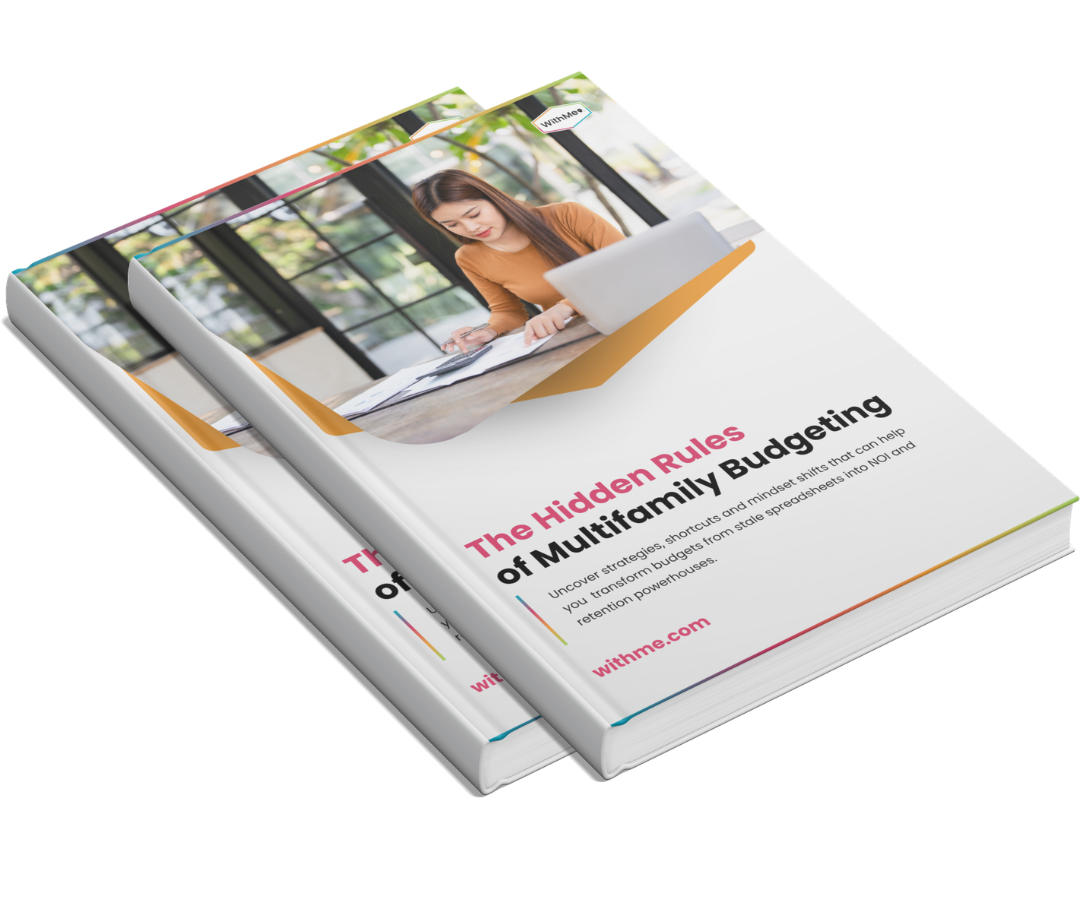
Check out The Hidden Rules of Multifamily Budgeting for practical insights, checklists and amenity strategies you can put to work during your next budget cycle.
Explore the resource