Independent hotels are built to feel different. Their coffee should, too.
In 2025, the National Coffee Association reported that two-thirds of American adults drank coffee every day. It’s the first priority before a meeting. The reset after a long travel day. A familiar comfort while waking up somewhere unfamiliar.
For something this habitual, quality isn’t a bonus. It’s expected.
Still, many hotels rely on coffee programs that create the same unproductive cycle:
- Serve basic drip coffee that feels disconnected from the rest of the property.
- Ask staff to monitor supplies, refill airpots and clean up throughout the morning rush.
- Lose guests—and their spending—to the coffee shop down the street.
In-room pod machines and lobby airpots technically provide coffee. But they rarely create the kind of premium coffee experience today’s travelers have grown accustomed to everywhere else.
Guests don’t leave their coffee standards at home with their phone charger.
That’s why independent hotels are rethinking coffee as more than a complimentary beverage. With the right model, an independent hotel coffee program can become a guest experience driver and revenue engine.
Independent hotels do not need a bigger coffee operation. They need a better one.
The independent advantage
Better coffee is an independent hotel advantage
Big brands have standards. Independent hotels have a point of view.
That distinction matters. An independent property can make coffee feel like a natural extension of the stay rather than another standardized station guests have seen a hundred times before.
The menu can reflect the preferences of the hotel’s guests. The presentation can complement the lobby. The service schedule can follow when people actually move through the property. None of that requires the hotel to start moonlighting as a third-wave café.
Coffee as a checkbox
It is technically available.
- Placed wherever space happens to be available
- Limited to the standard breakfast window
- Selected primarily for basic function
- Managed reactively when something runs out
Coffee as part of the stay
It feels like it belongs there.
- Positioned where guests naturally gather
- Available around real guest routines
- Presented in a way that reflects the property
- Supported by an operating model the team can sustain
The principle is simple: amenities connected to daily habits are more likely to generate consistent, repeat use than features people notice once and rarely think about again. Coffee already has the habit built in.
Independent hotels do not need to outspend larger brands to compete here. They have the more interesting opportunity: to out-consider them.
The independent-hotel advantage is not scale. It is the ability to make a familiar ritual feel like it belongs nowhere else.
The hidden tab
The coffee run rarely ends with coffee
Once a guest walks out for a latte, breakfast may join the order. A café table may become their office for the next hour. The hotel loses more than the price of one drink; it loses part of the guest’s time, attention and spending.
That lost opportunity is often called walkout revenue. It is difficult to spot because it never appears as a charge the hotel can review. It simply appears on someone else’s receipt.
Better coffee does not force guests to spend more. It removes one of their best reasons to spend somewhere else.
The coffee run
The receipt hotels never see
Real opportunity lost
More than one cup
Coffee has dayparts
Follow the guest beyond breakfast
Hotel coffee is often planned around one busy breakfast window. Guests, unfortunately, did not agree to stop wanting it when the airpots are put away.
The guest moment
An early departure or meeting that will not wait.
What matters
Morning coffee carries high perceived value. Guests need it to be available, fast and consistent before the rest of the hotel day begins.
The guest moment
Breakfast is over. The guest’s day is not.
What matters
Guests may be taking calls, meeting colleagues or regrouping in the lobby. Removing coffee now interrupts a routine the property has already helped create.
The guest moment
Check-in, laptop open, afternoon energy missing.
What matters
An afternoon latte is less likely to be expected for free, but convenience still matters. This is where paid specialty beverages can begin capturing demand.
The guest moment
A long travel day ends well after the breakfast crew has gone home.
What matters
Espresso, decaf or hot chocolate can provide a welcome reset for late arrivals without requiring the hotel to extend a staffed service window.
The best coffee schedule is not built around when service traditionally ends. It is built around when guest demand actually changes.
One program, two jobs
Complimentary and paid coffee can coexist
Charging for coffee and being hospitable are not opposites. The better question is when coffee creates the most value as a complimentary amenity and when guests are willing to pay for continued convenience.
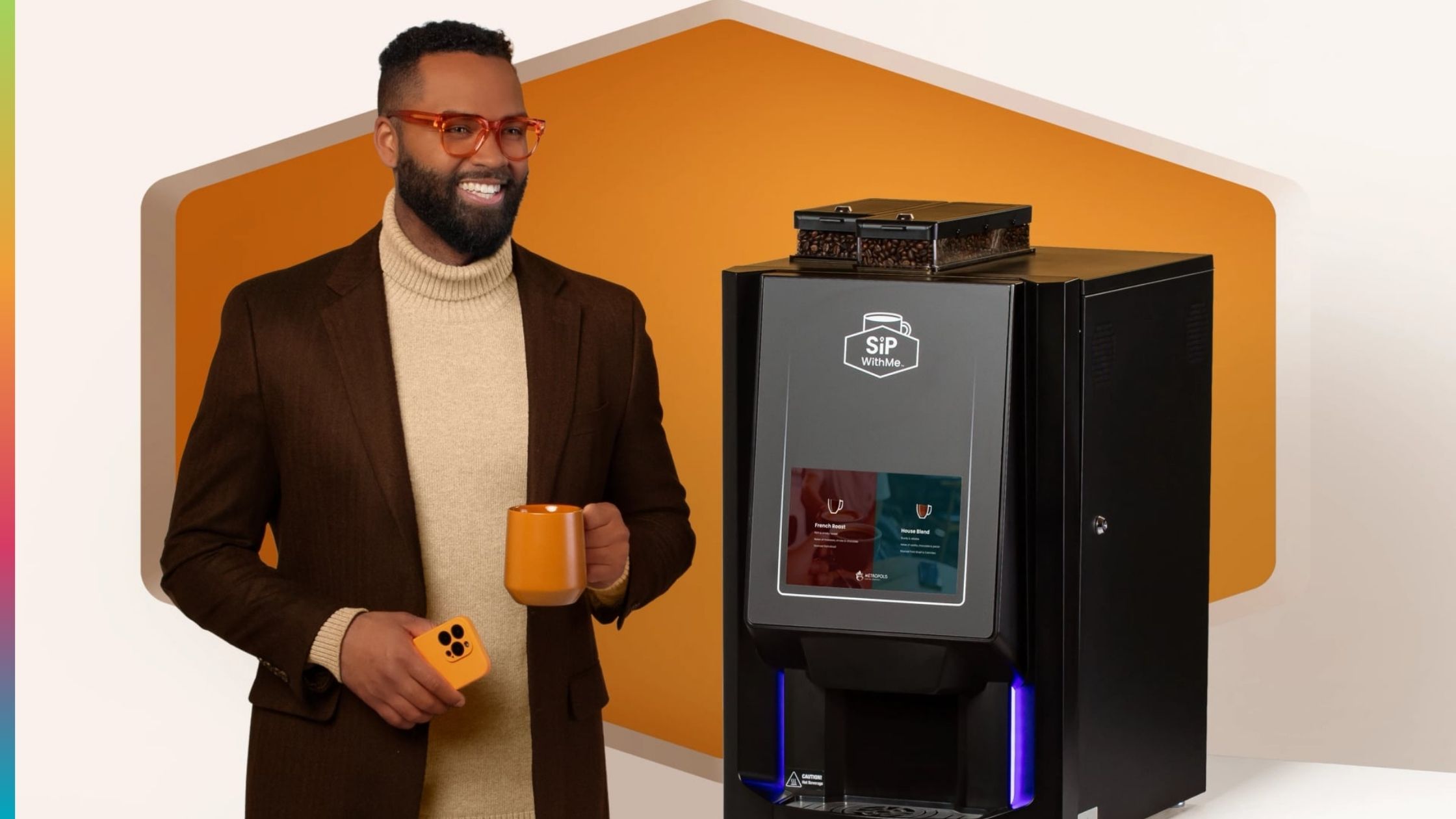
A hybrid model lets hotels do both. SipWithMe gives properties more flexibility in how coffee service works as demand changes throughout the day.
Morning
Complimentary hospitality
Offer café-quality drinks during the breakfast hours when guests are most likely to expect coffee as part of their stay.
Later in the day
Convenient paid access
Continue serving specialty beverages while capturing revenue from guests who would otherwise purchase coffee somewhere else.
Guests experience the same quality on both sides of the transition. Hotel teams do not need to swap signs, reset the system or manage another staffed service window.
Premium complimentary coffee
All-day specialty beverages
Greater cost control
Revenue without a staffed café
Try the numbers
Do the math before calling it revenue
Revenue projections get silly when the assumptions are hidden. A hotel does not need hundreds of paid orders a day to create meaningful beverage revenue, but it does need a realistic estimate of demand.
Adjust the number of paid drinks and average price below to estimate potential gross revenue outside the complimentary service window.
Build a simple scenario
Estimated gross revenue
Based on 25 paid drinks per day at $4.50 each.
Daily
$112.50
Per 30-day month
$3,375
Potential annual gross revenue
$41,063
Illustrative gross revenue only. This estimate does not account for occupancy, adoption changes, product costs, processing fees, taxes or other operating expenses.
The more useful question is not whether coffee can produce an impressive theoretical number. It is whether the property can capture realistic demand without adding a labor-heavy café operation.
Quiet by design
Revenue only works when operations stay boring
New revenue becomes considerably less exciting when it creates a second queue at the front desk. A strong coffee program should be dependable when guests need it and largely uneventful while the hotel team is busy doing everything else.
What the guest sees
A café-quality drink, made on their schedule.
The ordering feels simple. The quality feels consistent. Nobody needs to know how much coordination has disappeared behind the cup.
What happens behind the scenes
That is the thinking behind SipWithMe’s fully managed coffee experience for hotels. Guests get the part worth remembering. Staff members get fewer surprises.
The ideal operations report is remarkably uneventful: coffee available, supplies on the way and no lobby drama before 8 a.m.
Make it belong
Make the coffee bar feel like part of the hotel
A good coffee bar should look like someone planned it—not like the machine lost an argument with an empty wall. Placement, traffic flow and a few thoughtful details determine whether the space feels natural or awkward.
Once it is running, the property should measure what performs rather than assuming the amenity is working because nobody has complained.
Before the first cup
Design it for real traffic
- Put it somewhere guests can find without blocking check-in.
- Leave enough room to order, customize and move away with a full cup.
- Match the cups, signage and presentation to the property.
After the first cup
Measure what it changes
- Review usage and paid demand by time of day.
- Track beverage revenue, downtime and supply waste.
- Pay attention to how often staff still need to intervene.
If guests use it repeatedly and staff rarely have to explain it, refill it or apologize for it, the coffee bar is doing its job.
The bottom line
Better coffee can pull more than its weight
Independent hotels win in the details guests encounter without being told to notice them. Coffee is one of those details.
When it is good, easy to get and available at the right times, coffee can keep guests close and give the property another way to earn from demand that already exists. When it disappoints, the café down the street gets the opportunity instead.
The right program is not simply the one with better beans or shinier equipment. It is the one guests want to use and the hotel can realistically keep running.
Good coffee earns attention. A good coffee program earns its place.